

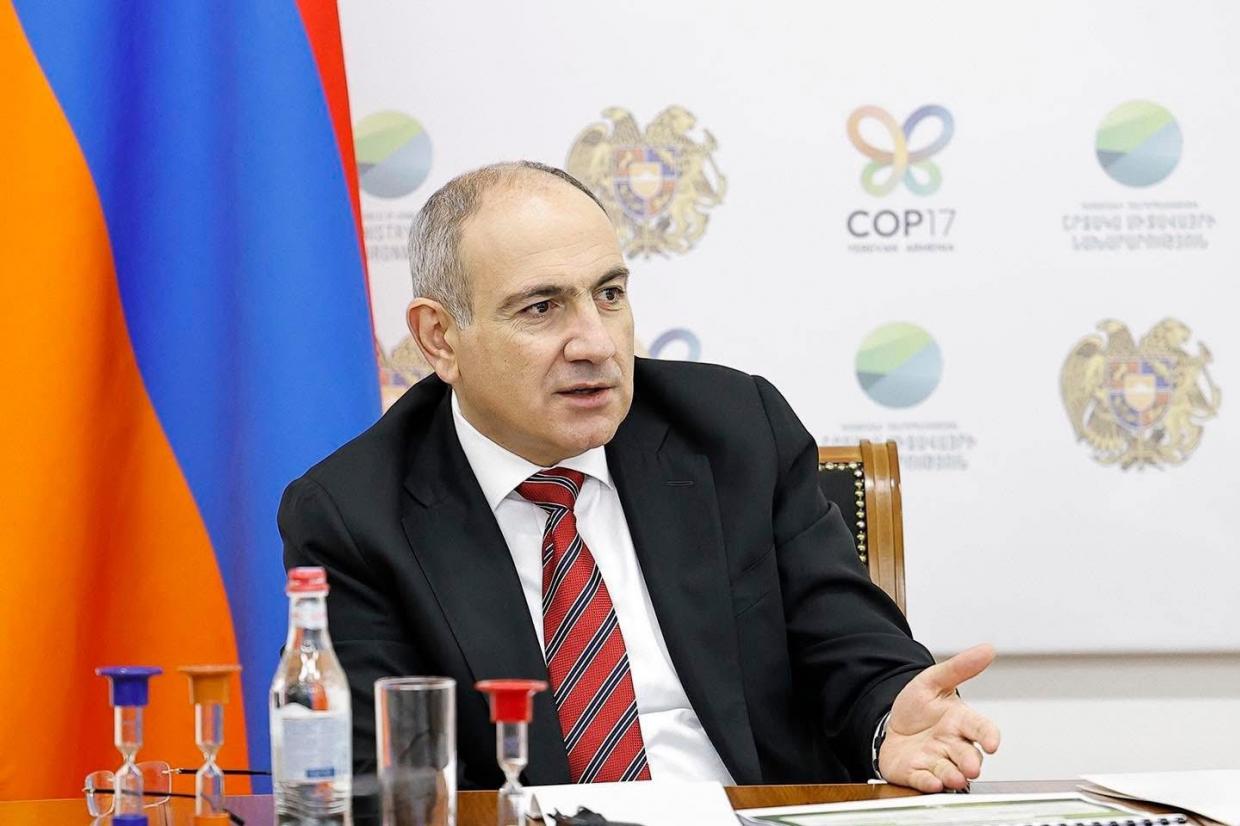
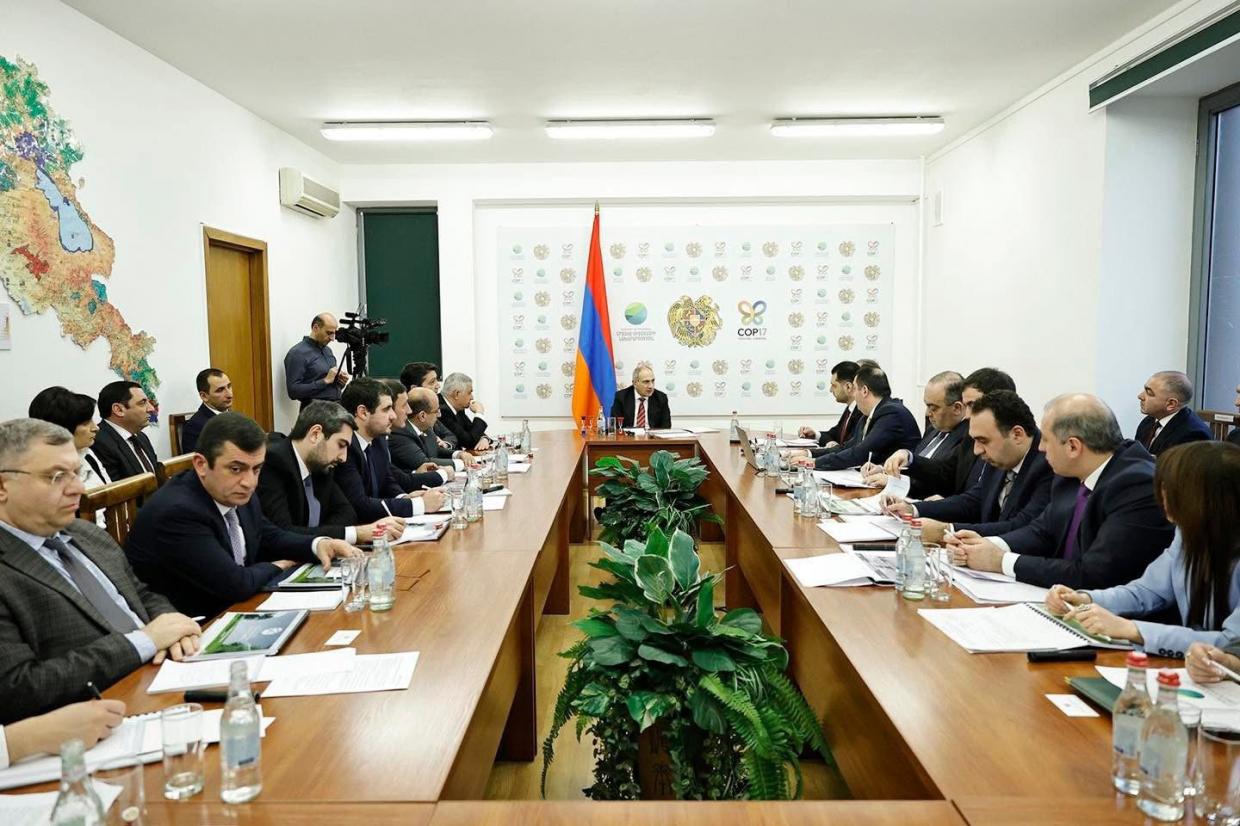
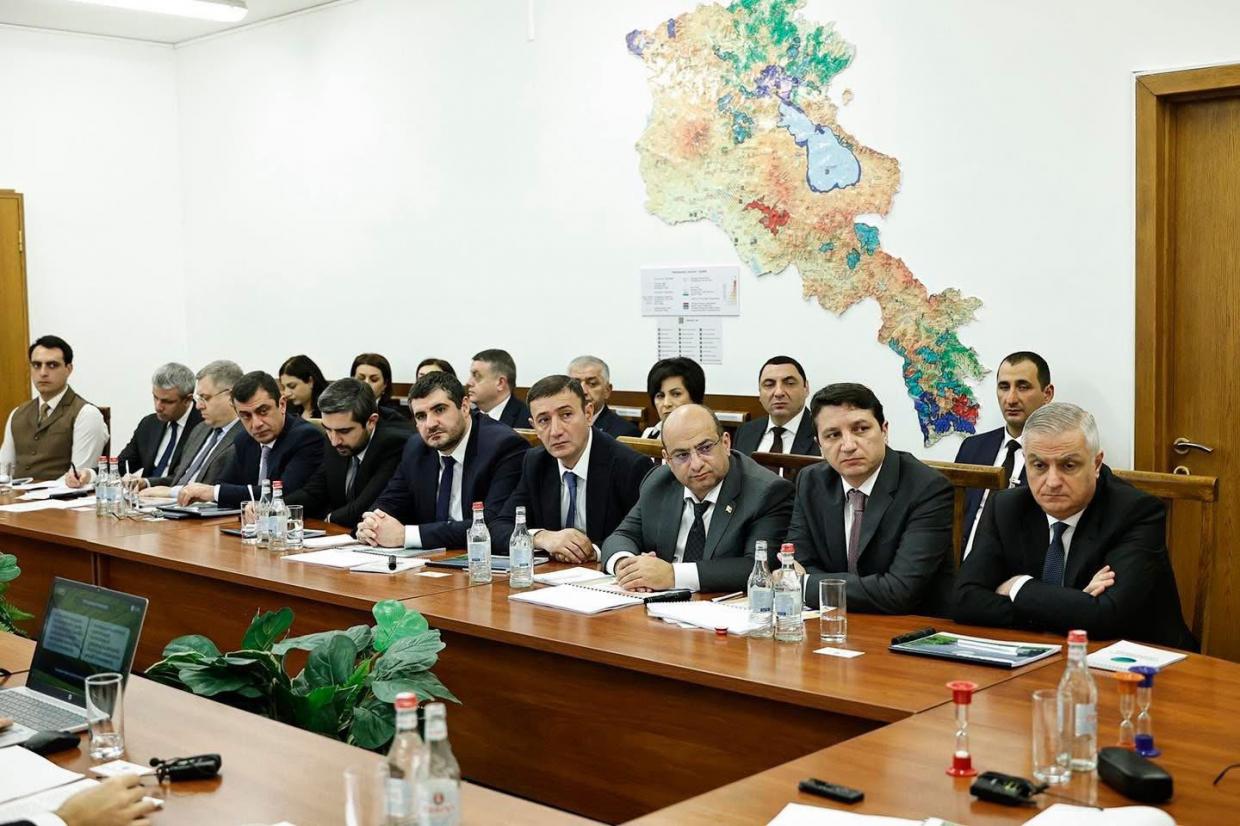
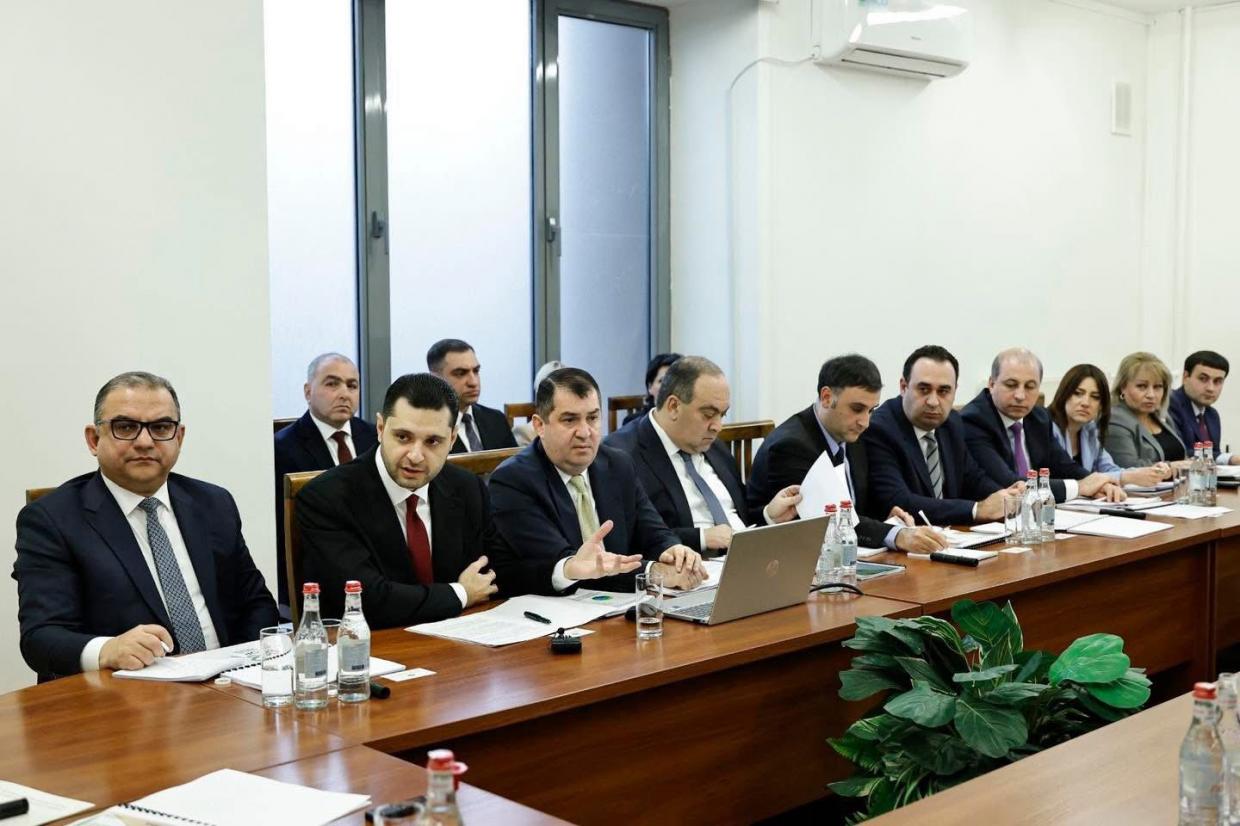



Prime Minister Nikol Pashinyan visited the Ministry of Environment to discuss the summary report on the department’s 2025 activity results and the work carried out.
During the report, Minister Hambardzum Matevosyan noted that in the 1st half of 2025, the ministry had 4 priority directions and implemented 15 measures, ensuring about 65% performance. In the 2nd half of 2025, 6 priority directions were set, 12 measures were implemented, and according to the Ministry of Environment’s assessment, about 95% performance was ensured.
In general, 2025 was characterized as a year of legislative regulations and decisions aimed at increasing the efficiency of sector management, as well as a stage of strengthening the role of the ministry on the international stage and unprecedented involvement.
Referring to the digitalization of permitting functions in the sector, the Minister noted that 12 services have been digitalized, bringing the total number to 24. As a result, the administration of services provided to the public has been significantly reduced. Since September, the process of issuing water use permits has been completely digitalized. At the same time, applications for amateur hunting and fishing, as well as the conclusion of contracts, are being accepted electronically.
Four services in the hazardous waste management sector have also been digitized. It was noted that from January 2026, the hazardous waste use license and its inserts will be provided in electronic or paper form, depending on the applicant’s preference, and from July they will be provided exclusively in digital format. An electronic database of greenhouse gas emissions has been created. The digitization of one of the most important services provided in the sector, the environmental impact assessment (EIA), will begin in 2026.
It was reported that the Syunik Regional Department of the Eco-Patrol Service has been fully operational since April 11, 2025. It has been staffed with 131 out of 182 planned positions, i.e. 72%. The process of filling vacant positions in the Tavush Regional Department has begun; 242 competitions have been announced, which are still in progress. The department’s round-the-clock service is planned to be launched in April 2026. The staffing of the Kotayk and Gegharkunik regional departments is planned to start in the near future.
During the reporting period, 903 cases of environmental violations were detected and recorded by 7 regional departments of the Eco-Patrol Service, in which 429 million drams of damage to flora and fauna was assessed.
In the first half of 2026, it is planned to complete the launch of the 24/7 service of the Tavush, Kotayk and Gegharkunik regional departments.
In the context of water resources management, it was noted that there is a water deficit in the Ararat artesian basin. In response to this, the annual volume of renewable water in the basin was reduced from 1.1 billion m³ to 926 million m³ by amending the laws, which will be distributed among water users according to priority areas and defined volumes. As of 2025, the annual water withdrawal for fish farming purposes (from deep wells) amounted to about 802 million m³, and with the new regulations it will amount to 509 million m³. As a result, over the next 1.5 years, water use for fish farming purposes will decrease by about 36.5%, and about 293 million m³ of water will be saved.
33 deep wells have been liquidated and conserved in Ararat and Armavir regions. About 34.5 million cubic meters of water have been saved annually, which is the maximum indicator in the last 5 years.
Within the framework of the works aimed at restoring biodiversity, it is planned to release 120 thousand Sevan trout fry into Lake Sevan, to obtain about 200 thousand Sevan bream fry (which will be released into the lake in 2027), as well as to obtain redfish fry through artificial reproduction, 50 thousand of which will be released into the upper reaches of the Dzoraget. These works are being carried out for the first time.
In 2025, the first law of the Republic of Armenia “On Climate” was adopted, which defined the framework of climate policy.
In the field of atmospheric air protection, the five-year air quality improvement program developed by the Ministry was approved by the Government’s decision. It provides for the modernization of the atmospheric air quality monitoring system: the acquisition of 14 stationary (6 for the city of Yerevan) and 2 mobile observation stations, the creation of modern laboratories, the establishment of a mandatory requirement for the use of dust neutralizing equipment in the construction and mining sectors, as well as the tightening of administrative responsibility.
In the field of forest restoration and protection, 759.6 ha of forest restoration and afforestation were carried out in 2025, including 170 ha of afforestation with state budget funds.
A 3.4 ha nursery has been established in 4 “Forestry” branches of “Armforest” SNCO. For the first time, biological control works against pests and diseases were carried out using drones in the 9,000 ha forested areas of “Armforest” SNCO.
According to Hambardzum Matevosyan, one of the priorities of the sector is the reduction of plastic use, which is enshrined in the Government's 2021–2026 program. It is planned to prohibit the alienation and possession of polyethylene bags and sacks, as well as disposable containers and tableware made of plastic or foam plastic, from January 1, 2027. A warning is provided for the first violation, and in case of repetition, a fine of 100,000–150,000 drams is provided, instead of the current 30,000–100,000 drams.
It was noted that Armenia will host and preside over COP17 in 2026. Organizing and holding the conference at a high level is one of the priorities of the ministry. The two events planned for the second half of 2025 have been fully implemented.